
Industry 03 Healthcare
AI in production for healthcare, with patient data kept apart.
We take AI into production for medtech, pharma and hospital networks, with HIPAA, MDR and EU AI Act requirements built into the architecture. Patient data stays protected, and every AI‑assisted clinical decision stays traceable.
What you get
Start with one critical workflow, in 1 week.
Deliverable
An Operating Assessment of one critical workflow, under its constraints (HIPAA, MDR and the EU AI Act): Time to Stop established, the workflow’s value quantified, a named owner and a plan to put it into production.
Timeline
1 week, from $18,000. The engagements that follow run 6 to 24 weeks, set at the diagnostic.
Who answers for it
A named partner signs each engagement: Xavier de Maillard, Rémi Claverie or Gilles Mischler. A senior partner answers your brief quickly, in writing.
The constraint, drawn
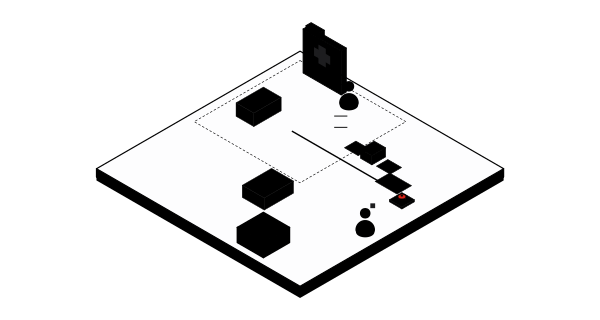
Patient data stays in its protected zone, on one platform.
HIPAA in the US and the MDR, Regulation (EU) 2017/745, in the EU ask the same product for different evidence. We separate the workloads that handle protected health information from those that do not, on one architecture, with defined transfer mechanisms between them.
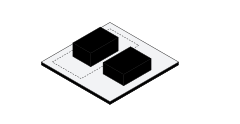
- APHI zone: the protected zone of workloads that handle protected health information
- BA PHI workload, inside the zone
- CA non-PHI workload, outside the zone, on the same architecture
Text version
One operating-layer plane carries a protected zone. Inside it, a workload that handles protected health information (PHI). Outside it, on the same plane, a workload that handles no PHI. The two are separated by the zone boundary, not by 2 platforms.
What makes this sector hard
Patient data sovereignty is a design property. It cannot be installed.
5 pressures decide whether a platform passes its first regulator inspection. We design for each in the architecture, before the inspection.
HIPAA in the US, MDR in the EU, in the same product
The two regimes have different evidence formats, retention rules and audit cadence. The platform must answer both from one architecture, not from 2 parallel compliance teams.
AI‑assisted clinical decisions under audit
Every prediction, recommendation or triage suggestion that touches a clinician must be traceable, explainable, retirable. The EU AI Act puts most clinical AI in the high‑risk band by default: embedded systems answer from August 2028, and a product that lives 10 years in clinical use is already inside that window.
Clinical workflow integration without disruption
Hospital networks do not stop. The platform must integrate with EHR, PACS, LIS, departmental systems, and the clinician must not feel the integration. Adoption fails on friction, not on features.
Patient data residency, by jurisdiction
National health data rules vary widely: France HDS, Germany BSI C5, UK NHS DSP, US state-by-state. The architecture must respect the strictest, not the average.
Long product lifecycle, regulated changes
MedTech products live 10 to 15 years in clinical use. Every substantive change requires re-validation, re-submission, re-audit. The platform must let you ship change at the cost of process, not at the cost of risk.
How we operate here
4 engagements, each with a stated duration and a named partner.
Pick the one that matches your next clinical or regulatory milestone. Patient data protection and audit evidence are built into the system, not added at the end.
HIPAA / MDR by architecture
8 to 16 weeks. We design the data layer, evidence chain and access trails so both regimes can be defended from one platform, with one audit pipeline.
Signed by Xavier de MaillardClinical AI evaluation framework
6 to 12 weeks. Every AI‑assisted clinical decision is traced, evaluated and can be retired, defensible under the EU AI Act from day one. We build the model registry, evaluation pipeline and drift monitoring.
Signed by Xavier de MaillardWorkflow integration without disruption
12 to 24 weeks. Integration with EHR, PACS, LIS and departmental systems under live operating conditions, with clinician adoption measured, not assumed.
Signed by Rémi ClaveriePatient data residency layer
6 to 12 weeks. Residency architecture honoring the strictest national rule on the workload, with defined transfer mechanisms and clean separation from non-PHI workloads.
Signed by Gilles Mischler
Offers deployed here
4 of our 9 offers, applied to healthcare.
- AI‑Enabled OperationsClinical AI with model registry, evaluation pipeline, kill switch by architecture.
- Custom Software PlatformsMedTech and hospital platforms engineered for HIPAA and MDR from the architecture.
- DevOps & Secure DeliveryDelivery posture defensible to internal audit, FDA software guidance, EU MDR.
- Run & Cost OptimizationContinuous operations with audit-ready evidence, on a clinical reliability standard.
Commercial engagement
3 stages, from first brief to production.
Start with one critical workflow and a free first response. Each stage gives you what you need to decide on the next one, before you commit to it.
-
First contact
Initial response
Reply in writingQuickly
Describe the workflow and its principal constraint.
- A named senior partner responds
- Qualification, not a diagnosis
- A clear reason if it does not fit
-
1 week · Paid engagement
Operating Assessment
From$18,000
1 week of work on one critical workflow, with the 4 deliverables below.
Deliverables:
- Time to Stop established
- The workflow’s value, quantified
- A named owner
- A plan to put it into production
-
Typically 12 to 24 weeks
AI‑Enabled Operations
Fixed price after scopingin the Operating Assessment · paid in phases, each ending with a go/no-go
One workflow taken from pilot to governed production, then handed to your team with the controls to run it.
Objective: a critical production workflow, with:
- Operational controls
- Governance
- Auditability

Scope, pricing and duration depend on the agreed engagement.
Your industry isn't listed?
Manufacturing, distribution, logistics, services: the 9 engagements apply as they are. Bring one critical workflow and the constraint it runs under; a partner answers quickly, in writing.
Bring the patient-data question
Before the next clinical AI deployment, map the evidence chain.
Describe the workflow and its principal constraint. A named senior partner replies quickly, in writing. If the brief fits, the next step is an Operating Assessment: 1 week, from $18,000.
Ask Hikari helps you frame the problem and proposes a first move. From the overlay, you can send the brief to a named partner with your name and work email.