
Trust CenterLast updated 2026-10-25
Engineered for audit. Honest about certification.
Before you sign, you can verify where your data lives, who else processes it, how a workload is stopped, what happens in an incident and which entity signs. We list no certification we have not earned.
SOC 2 Type II
In preparationISO 27001
Target 2027GDPR and CCPA documentation
AvailableEU AI Act traceability
Architecture propertyDORA / NIS2
Engagement-scopedHIPAA / MDR
Engagement-scoped
Includes: security posture, data residency model, AI audit‑trail approach, sub‑processors list, DPA template, compliance roadmap.
On this page
- 1. Standards posture
- 2. Sub‑processors
- 3. Model selection
- 4. Data residency
- 5. Security architecture
- 6. Responsibilities, client and Hikari Blue
- 7. Incident response
- 8. Responsible disclosure
- 9. Privacy and DPA
- 10. Legal and contractual framework
- 11. Exit and reversibility
- 12. Contracting entity
- 13. Supply chain security
Where we stand, in plain language.
Each line shows the real status today. A certification appears here only once its audit is passed, and the date of the next step is published as soon as it is set.
- SOC 2 Type IIIn preparation
Not certified. Control mapping in preparation across availability, confidentiality and processing integrity. The audit program has not started; the start date is published here when the auditor is engaged. We do not publish certifications we have not earned.
- ISO 27001Target 2027
Not certified. Information security management system in preparation; Statement of Applicability in draft. Certification audit targeted for 2027.
- GDPR & CCPAAvailable
Privacy notice published. DPA available on request. Sub‑processors list maintained (see below). Data subject request procedure documented.
- EU AI ActArchitecture property
Our delivery method is designed to produce the audit-trail evidence the regulation requires. Not a certification: a property of the architecture. Article 12 (record‑keeping) and Article 14 (human oversight) addressed by design, ahead of the high‑risk deadline moved to 2 December 2027 by the July 2026 Digital Omnibus. Article 50 transparency duties apply since 2 August 2026, and general-purpose model obligations since 2 August 2025, under Commission enforcement since 2 August 2026. Article 4 (AI literacy) is operationalized through dated, role‑resolved training paths, in force since 2 February 2025. See the acculturation path
- DORA / NIS2Engagement-scoped
Engagements in financial services and critical infrastructure include scoped DORA / NIS2 readiness work: ICT risk register, third‑party concentration, incident reporting timelines, resilience testing alignment.
- HIPAA / MDREngagement-scoped
Healthcare engagements include scoped HIPAA (US) and MDR (EU) readiness: PHI handling, BAA template, software‑as‑medical‑device classification framework, post‑market surveillance design.
- Audience measurementSovereign, live
First-party, anonymized, cookieless. No Google Analytics, no tag manager, no third‑party trackers. Designed to meet the CNIL audience‑measurement exemption; Do Not Track, Global Privacy Control and on-site opt‑out honored. Data lives on our infrastructure, purged on a 25‑month schedule. See the privacy notice
Request the full compliance roadmap under NDA
Verify Hikari Blue with a model we do not control
Regulated-grade, the standard we build to, is a working standard and not a certification: Regulated-grade: a working standard for AI in production
Who else can touch your data, and why.
2 lists, 2 scopes. The first names the services this website calls today. The second covers engagements: the DPA of each engagement sets it, so no name is listed here in advance.
Website sub‑processors (hikariblue.com)
Services called by the code of this website. They process visitor and form data only, never engagement data.
| Sub‑processor | Purpose | Region |
|---|---|---|
| Netlify | Hosting, build and delivery of hikariblue.com. Inbound form capture, site functions and their storage. | US · global edge |
| Anthropic | Model inference for Ask Hikari, and analysis of applications sent through the careers and network forms. | US |
| MailerLite | CRM and lead routing for inbound forms. Transactional delivery emails; editorial communications with separate opt‑in only. Sub‑processor DPA in place. | EU |
| Resend | Transactional notification emails sent to our own team: careers and network applications, inbound requests, and alerts when a request could not reach our CRM. | US |
| Google Workspace | Email infrastructure: the hikariblue.com mailboxes that receive form notifications. | US |
Engagement sub‑processors
Set engagement by engagement, in the DPA, before any client data is processed: model providers, cloud hosting, tooling. The list follows the model selection and the data residency chosen for each workload. Engagements requiring strict residency or zero‑cleartext processing run on a reduced subset.
Sub‑processors list maintained in each engagement’s DPA, on the review cadence it sets. Material changes notified to engagement clients with 30‑day notice. Request the engagement‑specific list
Who chooses the model, and on what criteria.
No model is imposed by default. Each workload receives its model through a recorded decision, and the same path governs any later change.
Criteria
Data classification and residency required by the workload. Quality measured on a test set built from your own cases. Cost per task and latency. The provider’s contractual terms: retention, use of data for training, processing region. A declared fallback model.
Who decides
Hikari Blue evaluates, recommends and documents the evaluation. The named owner of the workload, on your side, approves. No model goes into production without that approval.
Changing a model
A change follows the same path: evaluation, approval by the owner, entry in the audit trail. In our reference architecture, switching models is a routing change, not a rebuild.
You choose where your data is stored and processed.
The region is set for each workload when the engagement starts, not after an audit. Each row below gives the default and the stricter options available.
| Region | Default posture | Available stricter postures |
|---|---|---|
| European Union | EU‑residence compute, EU‑residence storage, EU‑residence model inference (Mistral or Anthropic EU). | France HDS Germany BSI C5 |
| United States | US-residence compute and storage. Standard SOC 2 control set. | FedRAMP-aligned HIPAA scope |
| Mainland China | In-country compute and storage via partner. Cross‑border transfer controls per PIPL. | PIPL strict |
| Switzerland | Swiss-residence compute and storage, or on‑prem deployment. Aligned to the revised FADP (nLPD) and FINMA outsourcing expectations for supervised institutions. | nLPD FINMA outsourcing |
| United Kingdom | UK-residence compute and storage. UK GDPR baseline. | NHS DSP toolkit |
6 security controls your CISO can check.
Encryption
TLS 1.3 in transit. AES-256 at rest. Key rotation on a 90-day cycle. Customer-managed keys available for sensitive workloads.
Access control
Least-privilege by default. Quarterly access review. SSO/SAML and MFA enforced on all operator accounts. Just-in-time elevation for sensitive operations.
Audit trail
In our reference architecture, every action, tool call, model output and operator override is recorded: append-only, queryable, exportable. Retained per engagement contract, minimum 12 months.
Kill switch
Per workload, per model, per user. Halt, throttle or roll back at the infrastructure layer, as specified in the reference architecture; demonstrated under NDA, never published as a measured figure. Not a feature retrofitted before audit: a property of the architecture.
Vulnerability management
Dependency scanning on every build. Third‑party penetration testing on the cycle set in each engagement contract; we propose annual at minimum, quarterly for high‑risk workloads. Patch SLAs aligned to CVSS severity.
Operator training
Annual security and privacy training. Confidentiality and data handling rehearsed on every engagement kick-off. Background checks for senior operators on sensitive engagements.

The audit trail, as a chain.
Each action becomes one record, linked to the previous one by its hash. The regulator export and the board report are read from the same chain.
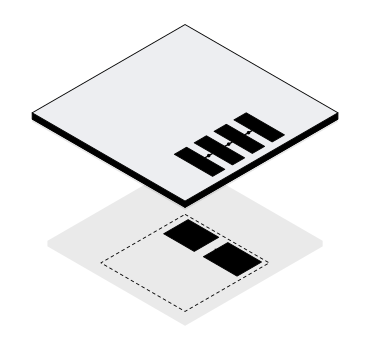
- Evidence and audit planeC2 in Reference Architecture v1.0: one record per action.
- Records #4124 to #4127Append-only, 9 fields each; #4127 is the action of this example.
- Hash linksEach record carries the hash of the previous one: an edit or a deletion breaks the chain visibly.
- Regulator exportA scoped extract for one system and one period, shipped with the chain hashes (seal).
- Board reportBuilt from the trail; every figure links back to its records.
Text version
The evidence and audit plane holds 4 records, #4124 to #4127, each linked to the previous one by its hash. Below it, the oversight zone receives a regulator export carrying the chain hashes under a seal, and a board report built from the same records.
Who does what, between you and Hikari Blue.
The default split of an engagement. The contract sets the final version, and any deviation is written into it.
| Area | Client | Hikari Blue |
|---|---|---|
| Going live | Decides and approves go-live, through the named owner of the workload. | Prepares the evidence for the decision: tests, risks, runbook. |
| Data and lawful basis | Classifies the data and holds the lawful basis, as controller. | Processes on your instructions, as processor, under the DPA. |
| Model selection | Approves the model of each workload. | Evaluates, recommends and records the decision. |
| Build and run | Grants access to systems and data within the agreed scope. | Builds, operates and monitors the operating layer within that scope. |
| Stopping a workload | The named owner can order a stop at any time. | Executes the stop; triggers it on the conditions written in the runbook, then informs the owner. |
| Incidents | Notifies regulators and data subjects when the law requires it of the controller. | Informs you within 1 hour for material incidents and supplies the evidence for notification. |
| User access | Manages your users and their rights. | Manages operator accounts: SSO, MFA, quarterly access review. |
| Exit | Names who takes over the operation. | Returns code, data and documentation, then deletes (see Exit and reversibility). |
If something breaks, here is what happens.
The procedure is written into the engagement before go-live, then rehearsed. Every step is recorded in the audit trail, and you know in advance when you will be informed.
- 01
Detect
Observability on every production workload. Anomaly alerts on token cost, latency, error rate, and unusual prompt patterns.
- 02
Contain
Kill switch engaged at workload, model or user level. Affected scope identified within 30 minutes. Customer informed via the engagement channel within 1 hour for material incidents.
- 03
Investigate
Audit trail walked end‑to‑end. Root cause documented. Forensic export available to customer security team on request. Coordinated disclosure if regulator notification required.
- 04
Resolve and retire
Permanent fix shipped with regression test. Lessons-learned memo signed by the named partner. Procedure updated. Customer post‑mortem within 2 business days for material incidents.
Regulator notification timelines (GDPR 72h, DORA 4h major incident, NIS2 24h early warning) are pre‑mapped per engagement. The framework is part of the engagement DPA, not a discovery during the incident.
Found a vulnerability? Tell us first.
We welcome coordinated vulnerability disclosure from researchers, customers, and operators. We commit to acknowledge within 2 business days, triage within 5, and publish a coordinated disclosure when fix is shipped.
Report a vulnerability
PGP key available on request. We do not pursue legal action against good‑faith security research conducted under the Hikari Blue safe-harbor terms.
Scope
hikariblue.com, its sub-domains and engagement-specific surfaces, under explicit authorization.
Out of scope: third‑party sub‑processor surfaces (report to vendor directly), DOS attacks, social engineering, physical surfaces.
Your data protection terms, written into the contract.
Privacy notice
Published. Covers what we collect on hikariblue.com (theme/language preferences in localStorage, plus sovereign first-party audience measurement: anonymized, cookieless, no third‑party trackers), how we handle inbound forms (Netlify Forms, routed to our MailerLite CRM with an email notification to a named partner), and retention.
Data Processing Agreement (DPA)
Standard DPA template available on request. Includes engagement-scoped sub‑processors annex, Standard Contractual Clauses (EU), and incident notification timelines aligned to GDPR / DORA / NIS2.
Sub‑processors notification
Material sub‑processor changes notified with 30‑day notice to engagement clients via the contracted communication channel.
Data subject requests
Procedure documented for access, rectification, deletion, portability and objection. Response within 30 days, 10 days when statutory.
The 4 contractual questions a Procurement team asks before signing.
Published here so the RFP starts at question 5. Our MSA template incorporates each of these as a baseline. Sector-specific addenda for Financial Services, Healthcare and Luxury available on request.
Liability framework
Standard cap at the value of the engagement, computed on the executed Statement of Work. Carve-outs for confidentiality breach, gross negligence and IP infringement follow Texas commercial code defaults. Sector-specific uplift available where regulation requires (DORA‑scoped engagements, HIPAA-covered work, EU AI Act high‑risk classification).
IP ownership at exit
All custom code, custom models, fine-tunes, prompt libraries, runbooks and operating documentation produced under the engagement belong to the client at exit. Hikari Blue retains a non‑exclusive licence to internal frameworks and reusable components, listed exhaustively in MSA Appendix A. No black box. No surprise licence fee at handover.
Audit rights
The client is entitled to one scheduled annual audit of Hikari Blue operations relevant to the engagement, plus any regulator-mandated audit (DORA, NIS2, HIPAA, MDR, sector authority). Scope, notice period and confidentiality terms defined in DPA. Cooperation extends to sub‑processors via flow-down clauses.
MSA template
Master Services Agreement template available under NDA, in English and French. Includes: services and SOW process, fees and invoicing, IP, confidentiality, data processing (links to DPA), liability cap and carve-outs, term and termination, dispute resolution. Negotiation governance: a named partner reviews any deviation request inside 72 hours.
How you leave, with your data and your systems.
The exit is planned at signature, not negotiated at the end. 3 commitments frame it.
Return of data
Your data, configurations, prompts, runbooks and audit trail are returned in open, documented formats. Code and documentation follow the IP terms at exit.
Attested deletion
Once you confirm the return, your data is deleted from the environments we operate and from engagement sub‑processors. The deletion is attested in writing by the named partner.
Timeline
Timeline set in the contract, for the return and for the deletion. The exit plan also covers the handover to your team or to the provider you choose.
Who signs your contract.
The entity that signs, as registered, and where to write to it.
Legal entity
UNITED4 LLC registered in Texas, USA. HIKARI BLUE is a trademark of UNITED4 LLC. Hikari Blue brand founded in Europe in 2016. In 2025, the house moved to Texas; its mailing address is in Austin.
Mailing address
14205 N Mopac Expy, Suite 570, Austin, TX 78728, USA.
What we ship is documented. Your keys stay with you.
What your CISO can show the board: an inventory of every component we ship, encryption keys kept in your custody, and the results of external security tests.
SBOM per engagement
In our reference pipeline, a Software Bill of Materials is generated and signed for every production build, by configuration per engagement. Format: SPDX or CycloneDX, client preference. Includes direct and transitive dependencies, license inventory, known CVE status at build time. Delivered with each release and on demand for incident response.
Customer-managed keys (CMK)
Supported by configuration in our reference architecture, for production engagements on AWS KMS, Azure Key Vault, GCP KMS and HashiCorp Vault (self-hosted or HCP). Key material remains in client custody at all times. Hikari Blue holds operational role bindings, never key material. Documented in DPA technical annex.
Third‑party security assessments
External penetration testing is scoped per engagement; once a test has run, its summary is shared under NDA. SIG Lite and CAIQ Lite questionnaires answered on request for vendor risk programs. Custom risk questionnaires accepted, with a turnaround agreed per request.
Next step: 3 engagements in production, what was measured and why no value is published. Work
The full compliance roadmap is one email away.
Under NDA, we share the control mapping as it stands, the engagement‑specific DPA addendum, the security architecture document, and the next 12 months of compliance milestones. A named partner replies quickly, in writing.