
Industry 04 Energy
AI in production for energy, across the OT and IT boundary.
We take AI and operating platforms into production for utilities, renewables and grid operators, across plant control systems and office IT. The system carries safety-critical responsibility and must outlive the multi-year program that built it.
What you get
Start with one critical workflow, in 1 week.
Deliverable
An Operating Assessment of one critical workflow, under its constraints (NIS2, OT cybersecurity and the EU AI Act): Time to Stop established, the workflow’s value quantified, a named owner and a plan to put it into production.
Timeline
1 week, from $18,000. The engagements that follow run 8 to 32 weeks, set at the diagnostic.
Who answers for it
A named partner signs each engagement: Gilles Mischler, Franck Ohrel or Xavier de Maillard. A senior partner answers your brief quickly, in writing.
The constraint, drawn
OT and IT in one perimeter, with a designed boundary.
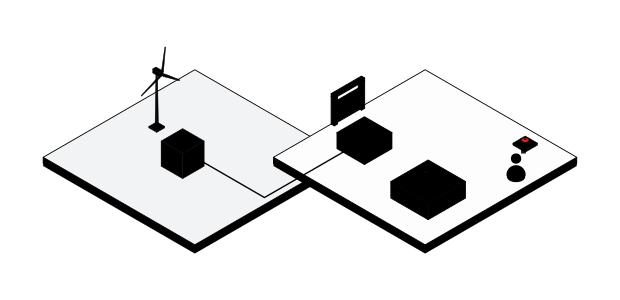
SCADA, ICS and control rooms run beside corporate IT and cloud workloads. Their threat models and patching cadences differ, so the boundary between them is designed, with its own evidence chain, not inherited from the network diagram.
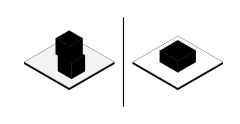
- AOT systems: SCADA, ICS, control rooms
- BIT system: corporate IT and cloud workloads
- CThe designed boundary between OT and IT in one perimeter
Text version
2 operating-layer planes stand side by side within one perimeter. On the left, 2 stacked operational technology systems: SCADA, ICS, control rooms. On the right, an IT system for corporate and cloud workloads. Between them, a vertical line marks the designed OT and IT boundary.
What makes this sector hard
IT and OT do not converge on their own. They are engineered to coexist.
5 pressures that break platforms designed only for office IT or only for plant systems. We design for each in the architecture from the start.
OT and IT cybersecurity in the same perimeter
SCADA, ICS, control rooms operating alongside corporate IT, cloud workloads and remote operations. The threat model and the patching cadence are radically different. A single architectural error compromises both.
NIS2 on operators of essential services
Energy is in the first tier of NIS2 enforcement. The reporting, evidence and incident timelines are non‑negotiable. Most legacy operating models cannot produce the artifacts the directive requires.
Long-cycle programs under shifting policy
5 to 10 years between board approval and production reality. Regulation evolves underneath. The operating model must accept policy change as a continuous input, not as a project amendment.
Asset data sovereignty
Grid topology, asset performance, demand response data all carry national security weight. Residency, processing and transfer mechanisms must match the strategic posture, not the cheapest cloud region.
Workforce transition: digital, grid and renewables converging
The talent profile shifts under the program. Predictive operations, AI on grid, renewables orchestration: the team that started the program is not the team that operates it. The architecture must support the handover.
How we operate here
4 engagements, each with a stated duration and a named partner.
Pick the one that matches your program phase. Each is built for a long horizon and safety-critical responsibility.
OT / IT cybersecurity architecture
12 to 24 weeks. We design the boundary, the evidence chain and the operating model that lets OT and IT coexist under one defensible cybersecurity posture.
Signed by Gilles MischlerLong-cycle program operating model
16 to 32 weeks. We structure the program governance, the milestone architecture and the policy-input cadence so a 5-year program survives the policy changes that will happen during it.
Signed by Franck OhrelPredictive operations on grid and assets
12 to 20 weeks. AI that anticipates grid and asset issues, with every output traced and a kill switch built into the architecture. It covers grid topology, asset condition and demand response, and is EU AI Act-defensible.
Signed by Xavier de MaillardAudit-ready evidence for NIS2
8 to 16 weeks. We design the platform-level evidence emission that lets the operator answer NIS2 between cycles, not in the week before the inspection.
Signed by Gilles Mischler
Offers deployed here
4 of our 9 offers, applied to energy.
- AI‑Enabled OperationsPredictive operations on grid and assets, with governance defensible at board register.
- Legacy ModernizationOT-IT modernization under reversibility, without breaking what keeps the lights on.
- DevOps & Secure DeliveryDelivery posture defensible to NIS2 and national OT cyber, continuously.
- Run & Cost OptimizationContinuous operations across a multi-year program horizon. Cost discipline and reliability balanced.
Commercial engagement
3 stages, from first brief to production.
Start with one critical workflow and a free first response. Each stage gives you what you need to decide on the next one, before you commit to it.
-
First contact
Initial response
Reply in writingQuickly
Describe the workflow and its principal constraint.
- A named senior partner responds
- Qualification, not a diagnosis
- A clear reason if it does not fit
-
1 week · Paid engagement
Operating Assessment
From$18,000
1 week of work on one critical workflow, with the 4 deliverables below.
Deliverables:
- Time to Stop established
- The workflow’s value, quantified
- A named owner
- A plan to put it into production
-
Typically 12 to 24 weeks
AI‑Enabled Operations
Fixed price after scopingin the Operating Assessment · paid in phases, each ending with a go/no-go
One workflow taken from pilot to governed production, then handed to your team with the controls to run it.
Objective: a critical production workflow, with:
- Operational controls
- Governance
- Auditability
Scope, pricing and duration depend on the agreed engagement.
Your industry isn't listed?
Manufacturing, distribution, logistics, services: the 9 engagements apply as they are. Bring one critical workflow and the constraint it runs under; a partner answers quickly, in writing.
Bring the long-cycle question
Before the next phase commits the program, map the operating model.
Describe the workflow and its principal constraint. A named senior partner replies quickly, in writing. If the brief fits, the next step is an Operating Assessment: 1 week, from $18,000.
Ask Hikari helps you frame the problem and proposes a first move. From the overlay, you can send the brief to a named partner with your name and work email.