The full-scale deployment of Microsoft 365 Copilot across Accenture is being framed as a landmark in enterprise AI adoption. It may, in fact, signal something else: the exposure of a consulting model historically built on information asymmetry, methodological standardization, and labor-based productivity.
If 743,000 Accenture employees are now using Copilot to accelerate routine tasks, the headline is undeniably powerful. Yet it embeds a deeper contradiction. Accenture's clients are already using Copilot as well.
At that point, a fundamental question emerges: what, precisely, is Accenture's role?
The traditional value proposition of consulting firms cannot sustainably rest on access to frameworks, slide production, document synthesis, or the industrialization of repeatable intellectual tasks. These are exactly the layers generative AI is compressing.
Consulting does not disappear. But its middle layer (the one that transforms widely available information into billable deliverables) is directly exposed.
Consulting does not disappear. Its middle layer does. Hikari Blue · operator note
The strategic choice not made
Accenture could have preserved some strategic differentiation by announcing large-scale deployment of Anthropic's Claude, domain-specific models, or a proprietary AI architecture with clear defensibility.
By standardizing on Copilot, it signals alignment with the same toolset its clients are adopting, at the same abstraction layer, within the same software stack.
The paradox is stark. If Copilot enables Accenture consultants to move fifteen times faster, it equally enables executive teams across finance, HR, legal, and operations to reduce their structural dependence on Accenture.
Beneficial for whom
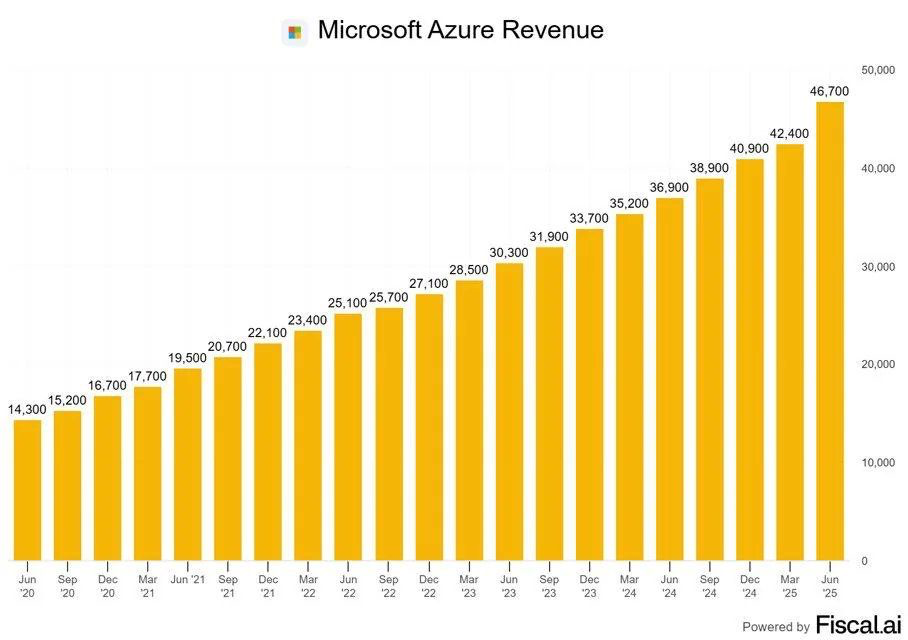
The question is not whether Copilot is beneficial for Microsoft. It likely is. Azure revenue tells that story already: from $14.3 billion quarterly in June 2020 to $46.7 billion quarterly in June 2025. The platform compounds.
The more relevant question is whether it is beneficial for Accenture.
That answer is considerably less comfortable.
At a minimum, positioning around Claude (or any model the client cannot trivially adopt at the same abstraction layer) might have preserved a degree of strategic credibility before facing direct disruption.
If your AI stack is identical to your client's AI stack, where is your margin?
The Hikari Blue team · Austin, April 2026