Enterprise AI Agents

Put AI agents to work across your business.

Turn repetitive work and fragmented workflows into coordinated execution, with AI agents engineered around your people, systems, and business goals.

We do not sell agents. We engineer business capability, and we measure it on your operations, full costs included.

  • First exchange Free, in writing, with a named partner
  • Markets United States · Switzerland · France
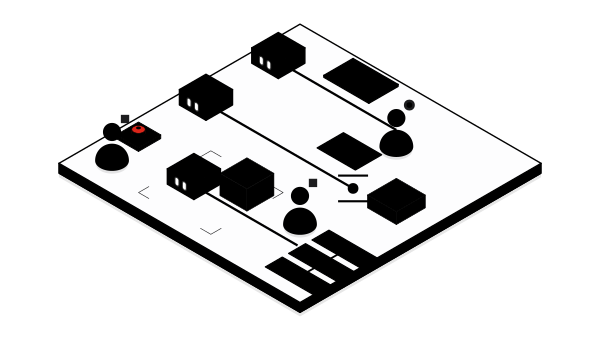
Three specialized agents carry one piece of work from sales to finance to operations, and the result rises.One piece of work travels the lane; each agent and its system light up as it passes.The person with the square badge is the named owner who answers for the agents.Red buzzer: the stop, at hand of the named person.

The business opportunity

Where the value comes from, in measures you already report.

An agent is worth what it changes in the operation. We start from the mechanism of value, then engineer the agents that serve it.

Mechanisms, not promises: each effect is measured on your operations, against a baseline taken before the work starts.

  1. 01 · Time

    Faster execution

    Requests, files and orders move when they arrive, not when someone is free to copy them between applications.

    Measured by
    Handling time and resolution lead time.
  2. 02 · Capacity

    Greater operational capacity

    Agents take the repetitive steps, so your teams absorb more volume without hiring in proportion.

    Measured by
    Volume processed per team, and the backlog.
  3. 03 · Cost

    Lower avoidable operating costs

    Re-keying, rework and chasing information cost money and add nothing. Removing them lowers the cost of each operation.

    Measured by
    Cost per operation, agent costs included.
  4. 04 · Revenue

    New business capabilities

    Faster proposals, consistent follow-up, services you could not staff by hand. Work becomes possible that was not worth doing before.

    Measured by
    Response time, conversion, revenue per account.
  5. 05 · Quality

    Consistent quality

    Every operation follows the same rules and checks. Errors and exceptions surface early, with the record of what happened.

    Measured by
    Error rate, exception rate, rework.
  6. 06 · Control

    Governed autonomy

    Each agent acts within permissions set by risk, every action is recorded and a stop stays at hand. Value that holds up in an audit lasts.

    Measured by
    Human interventions, incidents, time to stop.

See how we measure the gain

Where agents work

Three workflows where agents change how the work gets done.

Each scenario follows the same path: the situation today, the specialized agents, the systems they work in, the people who supervise, the operational result.

Illustrative scenarios, drawn from common workflows. Your first workflow is chosen with you, on your data and your systems.

Scenario 01

Sales & Revenue Operations

From incoming lead to approved proposal, with the CRM kept current.
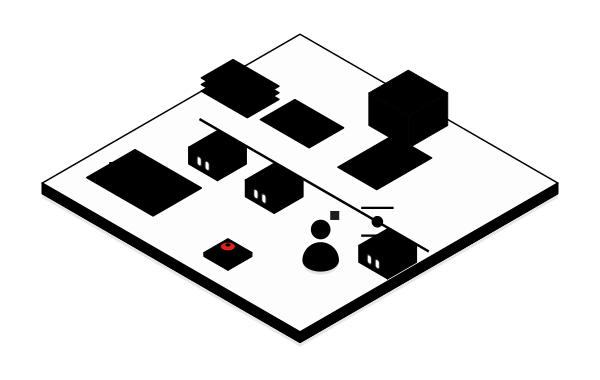
A sales workflow: incoming leads are qualified, a proposal is prepared and approved by a salesperson, the CRM stays current and the order book rises.
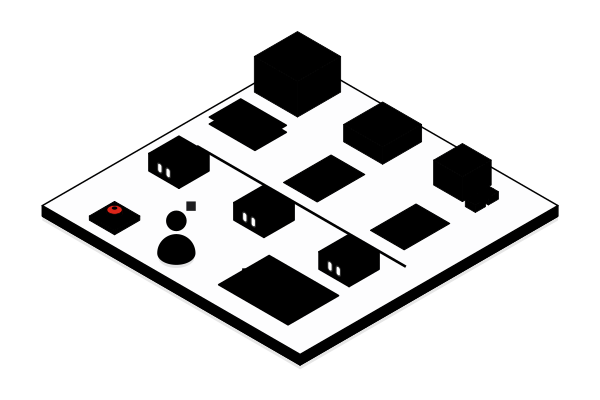
The two ticks and the dot on the lane: the approval gate held by the salesperson.In motion, blue marks what the agents work on, amber waits for a person, green is approved.Red buzzer: the stop, at hand of the named person.
  1. Situation today

    Leads arrive faster than the team can qualify them. Proposals take days to assemble, CRM records go stale and follow-ups slip.

  2. Specialized agents

    A qualification agent scores and enriches each lead. A proposal agent drafts the proposal from your price lists and past offers. A follow-up agent prepares the next touch.

  3. Systems

    They read and write in your CRM, your price tables and your document templates, with the access of the role they serve.

  4. Human supervision

    A salesperson approves every proposal and every message that commits the company. Discounts above your threshold go to the sales director.

  5. Operational result

    Proposals leave sooner, the CRM stays current and sellers spend their time on the decisions that win the customer.
Scenario 02

Finance & Administration

From documents received to entries checked and payments authorized.

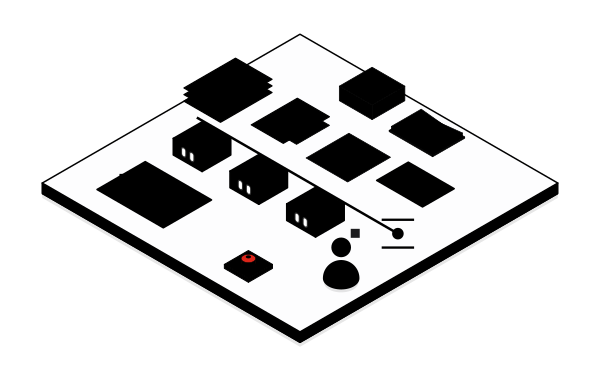
A finance workflow: invoices are read, matched and checked by agents, and a named approver authorizes the payment before it leaves.
The two ticks and the dot on the lane: the approval gate held by the named approver.In motion, blue marks what the agents check, amber the payment waiting, green authorized and recorded.Red buzzer: the stop, at hand of the named person.
  1. Situation today

    Invoices, receipts and statements arrive in every format. Matching is manual, controls are sampled and the close runs late.

  2. Specialized agents

    A document agent reads and classifies each document. A reconciliation agent matches it with orders and bank lines. A control agent checks each entry against your rules.

  3. Systems

    They work in your ERP, your bank feeds and your document repository. Payment files are prepared, never released by an agent.

  4. Human supervision

    A named approver authorizes every payment and every entry above the threshold. Nothing that moves money leaves without a human decision.

  5. Operational result

    Matching keeps pace with the documents, every control is recorded and the close starts from cleaner books.

Scenario 03

Operations & Supply Chain

From scattered data to orders prepared and exceptions handled in time.

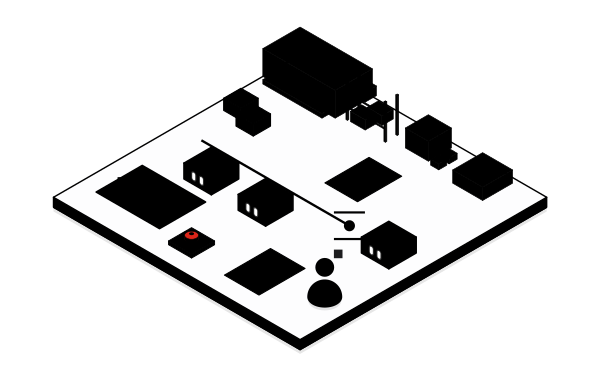
An operations workflow: agents align orders and stock, prepare the purchase order and route an exception to the planner who owns it.
The two ticks and the dot on the lane: the approval gate held by the planner.In motion, blue marks the agents at work, amber what waits for the planner, green the approved order.Red buzzer: the stop, at hand of the named person.
  1. Situation today

    Orders, stock and supplier data sit in separate applications. Planners spend their day reconciling them and find exceptions late.

  2. Specialized agents

    A data agent keeps orders, stock and supplier commitments aligned. An order agent prepares replenishment and purchase orders. An exception agent detects delays and shortages.

  3. Systems

    They connect your ERP, your order management and your supplier portals, and carry information between applications that do not talk to each other.

  4. Human supervision

    Each exception reaches the planner who owns it, with the record of what the agents did. Purchase orders above your limits wait for approval.

  5. Operational result

    Exceptions surface while there is still time to act, and planners spend their day on the decisions only they can make.

From manual work to agentic operations

We redesign the workflow, then put the agents inside it.

Adding a tool next to the work changes little. The gain comes from redesigning the flow with the team that runs it.

  1. Before

    Manual work

    The work
    People re-key, copy and chase information between applications.
    The systems
    Each application holds part of the truth. Nobody sees the whole flow.
    The exceptions
    Found late, often by email, once the cost is already incurred.
    The measure
    Effort is invisible and the cost of each operation is an estimate.
  2. Intervention

    What we engineer

    The work
    Specialized agents take the repetitive steps, inside the existing workflow.
    The systems
    Agents connected to your CRM, ERP and documents, each with scoped permissions.
    The exceptions
    Rules, thresholds and approval gates designed with the people who own them.
    The measure
    A baseline measured before the work starts, on the indicators you choose.
  3. After

    Agentic operations

    The work
    Agents execute. People decide, approve and handle what is new.
    The systems
    One coordinated flow across applications, with every action recorded.
    The exceptions
    Routed at once to the person who owns them, with the context.
    The measure
    Time, cost, volume and quality reported for every operation.

Our engineering method

Discover. Engineer. Deploy. Operate & Scale.

Four stages, each with its deliverables and a decision before the next. The method frames the work. It is never imposed as a tunnel.

  1. Discover

    We map the workflow with the people who run it, measure the baseline and choose the first agentic workflow on value and risk.

    Deliverables

    • Workflow map and baseline
    • Value case, full costs included
    • Autonomy level for each step
  2. Engineer

    We build the agents, their tools and permissions, the integration with your systems and the controls around them.

    Deliverables

    • Agents and integrations
    • Permissions and approval gates
    • Evaluation set and action record
  3. Deploy

    We put the workflow into production in stages, with your team, and compare each stage with the baseline.

    Deliverables

    • Staged rollout plan
    • Runbooks and stop procedure
    • Before-and-after report
  4. Operate & Scale

    We run, measure and improve the agents, then extend to the next workflow on the evidence, or hand over to your team.

    Deliverables

    • Operating review with the named owner
    • Cost and quality reporting
    • Next workflow, or handover

Three ways in.

Start where you are. Each entry joins the method at the stage that fits.

  • A project already scoped

    You know the workflow and the outcome. We review scope and risk, then start at Engineer.

  • A need for diagnosis

    You know the ambition, not the first workflow. The Operating Assessment chooses it with you, on value and risk.

  • Agents already running

    Agents exist but are not measured or not governed. We take them over, put them under control, then industrialize what earns it.

Commercial engagement

From the first exchange to agents in production.

  1. First exchange · Free

    Initial response

    Reply in writingQuickly

    Describe the workflow and its principal constraint.

    • A named senior partner responds
    • Qualification, not a diagnosis
    • A clear reason if it does not fit
  2. One week · Paid engagement

    Operating Assessment

    From$18,000

    One week of work on one critical workflow, with the four deliverables below.

    Deliverables:

    • Time to Stop established
    • The workflow’s value, quantified
    • A named owner
    • A plan to put it into production
  3. Scoped from the Assessment

    Engineering and operation missions

    paid in phases, each ending with a go/no-go

    Agents engineered into your workflow, deployed, then operated and extended on the evidence.

    Objective: agentic workflows in production, with:

    • Results measured on the operation
    • Governed autonomy
    • A named owner for each workflow

Scope, pricing and duration depend on the agreed engagement.

Autonomy by design

Each step gets the autonomy its risk allows.

Autonomy is a setting decided with you, step by step, not a property of the agent. It rises as evidence builds and can be lowered at any time.

Three levels of autonomy: an agent assists a person, an agent acts after approval, and an agent acts alone within limits, with every action recorded.
Top to bottom: assistance, supervised execution, bounded autonomy.The two ticks and the dot: the approval gate. In motion, amber waits and green is approved.Corner brackets: the limits of the agent acting alone. Each of its actions joins the chain of records.Red buzzer: the stop, at hand of the named person.
  1. Level 1

    Assistance

    The agent prepares. A person acts.

    Typical steps
    Drafting a proposal, summarizing a file, suggesting a match.
    Your people
    Decide and execute.
  2. Level 2

    Supervised execution

    The agent acts once a person approves.

    Typical steps
    Sending a quote, preparing a payment, posting an entry above a threshold.
    Your people
    Approve at the gate, with the context in front of them.
  3. Level 3

    Bounded autonomy

    The agent acts alone, within limits you set.

    Typical steps
    Updating the CRM, matching below a threshold, routing an exception.
    Your people
    Set the limits, review the record, stop it at any time.

The level follows the risk of each step: the higher the risk, the closer the human decision.

Three controls on every agent.

  • Permissions

    Each agent has its own identity and only the access its task requires. Nothing is inherited by default.

  • Record

    In our reference architecture, every action, tool call and human decision is written to an append-only record you can query and export.

  • Stop

    The workflow halts on demand, at the infrastructure level. How fast you can stop is measured, not promised.

Measurement & accountability

We measure the gain on your operations, full costs included.

Every engagement starts with a baseline and closes each stage with a before-and-after comparison that isolates the effect of the project. You see what the agents cost, not only what they do.

How the net economic impact is counted

Gains measured on the operation

  • Time recovered
  • Capacity added
  • Avoidable cost removed
  • Revenue enabled
  • Errors avoided

minus

Full cost of the agents

  • Integration
  • Maintenance
  • Inference
  • Supervision

equals

Net economic impact

Reported when it can be quantified, never estimated when it cannot.

  • Against the baseline. The same workflow, measured before the project, so the effect shown is the project’s.
  • The cost of inaction. When relevant, what the current way of working costs for each month it continues.

The operating scorecard.

Eleven indicators, reviewed with the named owner at each operating review.

Speed and volume

Average handling time
From arrival to completion, for each operation.
Resolution lead time
Time to close an exception or a request.
Volume processed
Operations completed, by agents and by people.

Quality and control

Exception rate
Share of operations that leave the standard path.
Quality and errors
Errors found downstream, corrections and rework.
Human interventions
Approvals, corrections and overrides, step by step.

Cost

Cost per operation
Every cost of the workflow, divided by the operations it completes.
Agent operating cost
Integration, maintenance, inference and supervision, counted in full.

Impact

Net economic impact
Gains minus full costs, when it can be quantified.
Before and after
A comparison that isolates the effect of the project.
Cost of inaction
What the current way of working costs, when relevant.

Buyer questions

What executives ask before the first workflow.

Do you sell an agent platform?

No. We engineer agents into your workflows, on your systems, and run them with you. The architecture works with Anthropic, OpenAI, Mistral or Google models, so you are not bound to one vendor.

Where do we start if no agent runs yet?

With one workflow. The Operating Assessment, one week, chooses it with you on value and risk, and sets the baseline the results are measured against.

We already run agents. Can you take them over?

Yes. We review what runs, put it under the same controls (a named owner, a record, a stop), measure it, then decide with you what to industrialize, rebuild or retire.

How do you measure the return?

Against the baseline taken before the work starts, on indicators of the operation: time, cost per operation, volume, exceptions, quality and human interventions. Gains are reported net of the full cost of the agents.

Who is accountable when an agent makes a mistake?

A named owner on your side for each workflow, and a named partner on ours for the engagement. Every action is recorded, so a mistake can be traced, corrected and, if needed, stopped.

Do agents replace our teams?

We decide with you which steps an agent takes and which stay with people. Decisions, exceptions and customer relationships stay with your teams.

What does it cost to start?

The first exchange is free. The Operating Assessment takes one week, from $18,000. Engineering and operation missions are scoped from it and paid in phases, each ending with a go/no-go.

Start with your workflow

Bring one workflow. Leave with the first agentic move.

Describe the workflow and what it costs you today. Ask Hikari helps you frame it and proposes a first move, then a named partner follows up in writing.

Let’s identify your first agentic workflow Book a 30-min call

The first exchange is free. If the brief fits, the next step is an Operating Assessment: one week, from $18,000.